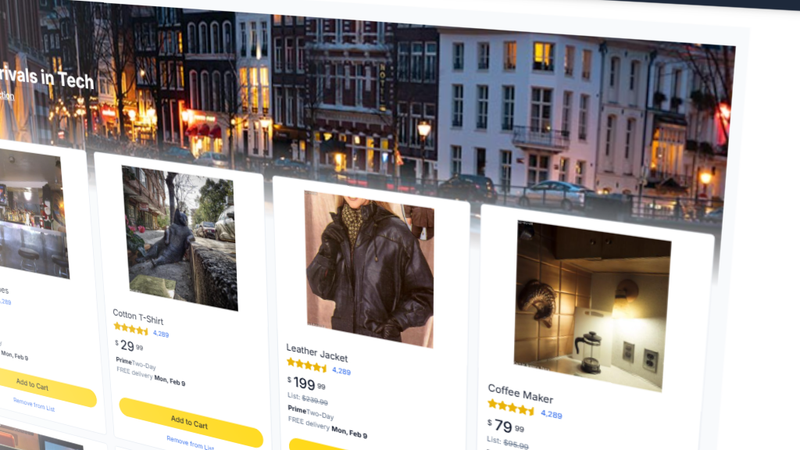
Enterprise-Grade E-Commerce: A Study in High-Performance Distributed Systems
In today’s digital economy, an e-commerce platform must be more than a digital storefront; it must be a resilient, observable, and ultra-fast ecosystem. This showcase project demonstrates a full-stack distributed architecture built with the cutting-edge capabilities of .NET 10 and Angular 21.
🎯 The Objective
The goal was to engineer a system that solves the three most common pain points in modern web applications:
- Scalability: Handling traffic spikes without service degradation.
- Consistency: Managing complex transactions across distributed databases.
- Observability: Reducing the "Mean Time to Recovery" (MTTR) through deep telemetry.
🏗️ Architectural Excellence
Backend: Resilience via Microservices
The backbone of the system is a distributed network of 7 specialized microservices. Built on .NET 10 and following Clean Architecture principles, the backend is designed for independent deployment and scaling.
- Asynchronous Communication: Using MassTransit and RabbitMQ, the system decouples critical paths. For example, the "Order" service doesn't wait for "Inventory"—they communicate via events, ensuring the UI remains responsive even under heavy load.
- The Saga Pattern: To maintain data integrity without monolithic locking, I implemented full Saga orchestration. This manages the complex lifecycle of an order, including automated "compensating transactions" if a payment fails.
- Storage Strategy: A hybrid approach using PostgreSQL for relational data and Redis for high-speed distributed caching.
Frontend: The "Zoneless" Performance Edge
The frontend leverages Angular 21, pushing the boundaries of what’s possible in browser performance.
- Zoneless Architecture: By removing
zone.js, the application eliminates the overhead of global change detection. Instead, it uses NgRx Signals to trigger fine-grained updates only where data actually changes. - Modern Design Systems: Styled with TailwindCSS v4 and PrimeNG v21, the interface provides a premium, responsive user experience that mirrors the speed of the backend.
🧠 Why This Tech Stack?
1. The Gateway Pattern (YARP)
Instead of exposing individual services to the public, I utilized YARP (Yet Another Reverse Proxy). This serves as a robust API Gateway that handles CORS, unified authentication, and rate limiting in a single, high-performance layer.
2. Full-Stack Observability
A system is only as good as its visibility. This project is fully instrumented with OpenTelemetry.
- Distributed Tracing: Every user interaction is traced through Jaeger, allowing me to visualize the journey of a request from the Angular frontend, through the Gateway, and across multiple microservices.
- Centralized Logging: Integrated with Seq, providing structured logs that make debugging production issues a matter of seconds, not hours.
🚀 DevOps & Deployment
Efficiency extends to the developer experience. The entire ecosystem—including the database, message broker, and telemetry tools—is containerized.
- Docker Orchestration: A single command launches the full stack, ensuring parity between local development and production environments.
- Automated Testing: The frontend is rigorously tested using Vitest, focusing on unit and integration tests for reactive components.
💡 The Result
This showcase isn't just about code; it’s about architectural integrity. By combining the latest iterations of .NET and Angular with industry-standard patterns like Sagas and Event-Driven Design, I have built a blueprint for scalable, enterprise-ready software.
Crafted by Stanley Morales Senior Software Engineer & Architect