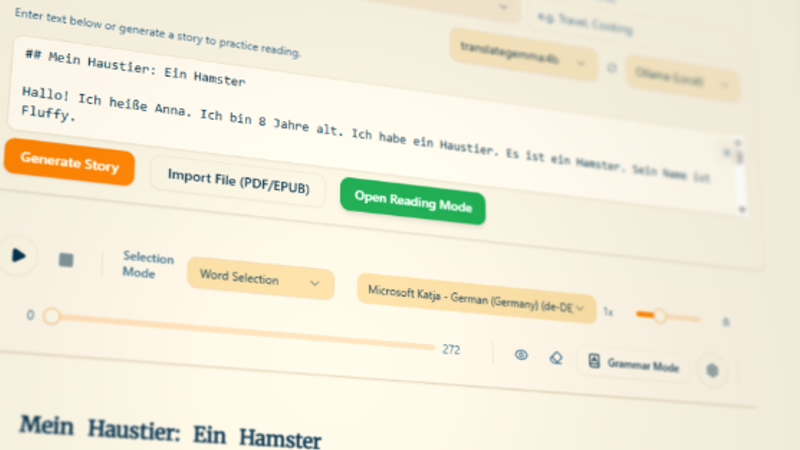
Flux: Engineering a Private, AI-Driven Reading Experience
In an era of cloud-dependency and data tracking, Flux was born from a simple question: Can we build a premium AI reading assistant that runs entirely on local hardware? Flux is a sophisticated "Self-Hosted Cloud" platform designed to help language learners move from struggling with text to fluent comprehension through interactive AI tokenization and neural audio.
🧠 The "Self-Hosted Cloud" Architecture
Most AI apps are thin wrappers around expensive APIs. Flux takes a different approach by treating your local machine as the cloud provider.
- Hybrid Monorepo: Using NPM Workspaces, I managed a React 19/NextJS frontend and a NestJS backend in a single repository.
- The Backend "Brain": The NestJS server acts as a secure proxy. While the frontend feels like a native app, the backend handles the heavy lifting—managing persistence via Prisma and orchestrating requests to Ollama (the local LLM engine).
- AI Abstraction: The frontend never talks to the AI directly. By proxying through NestJS, the system is future-proof; I can swap local models for OpenAI or Anthropic without changing a single line of frontend code.
✨ Engineering the User Experience
Building a tool for "Deep Reading" required solving complex UI and synchronization challenges that go beyond standard web development.
1. Interactive Tokenization
Text isn't just a string in Flux; it’s an interactive map. I developed a tokenization engine that breaks down text into selectable units. This allows for:
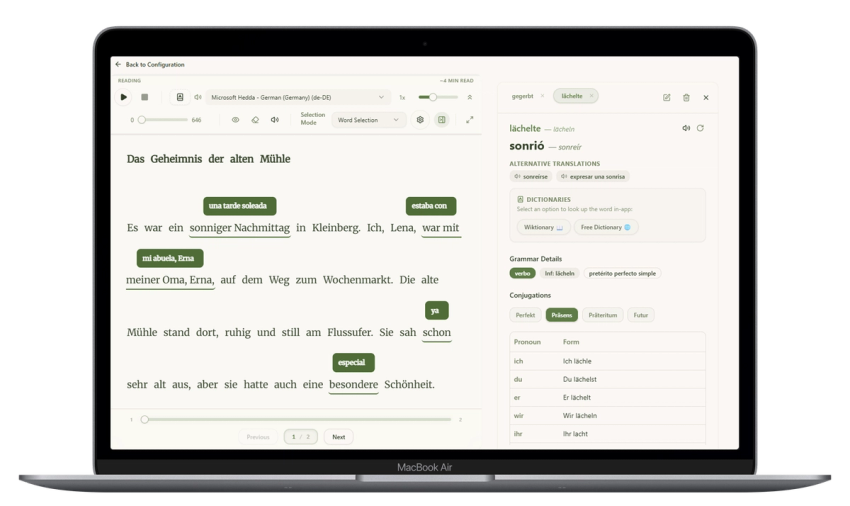
- Context-Aware Dictionary: Hovering over a word doesn't just give a definition; it sends the surrounding sentence to the local LLM to provide a translation that fits the specific context.
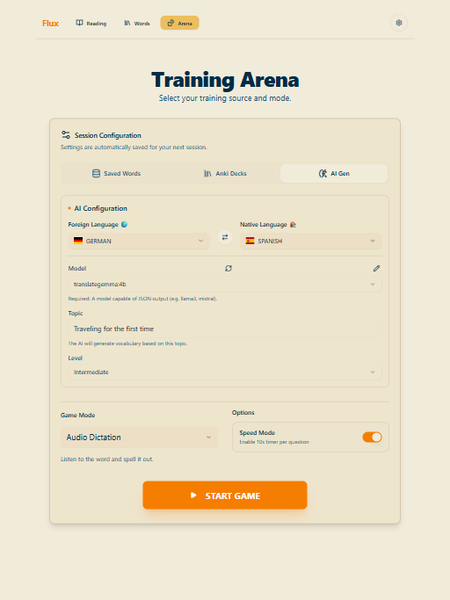
- Streaming AI Content: Users can generate custom reading material, which is delivered via NDJSON streaming for real-time feedback.
Inmmersive and comprehensive learning
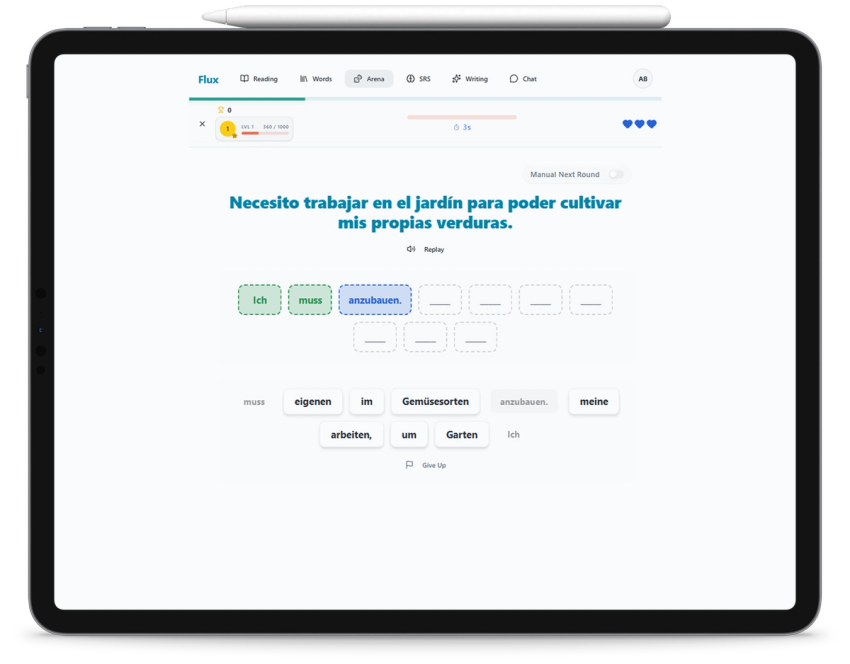
Gamified and Responsive
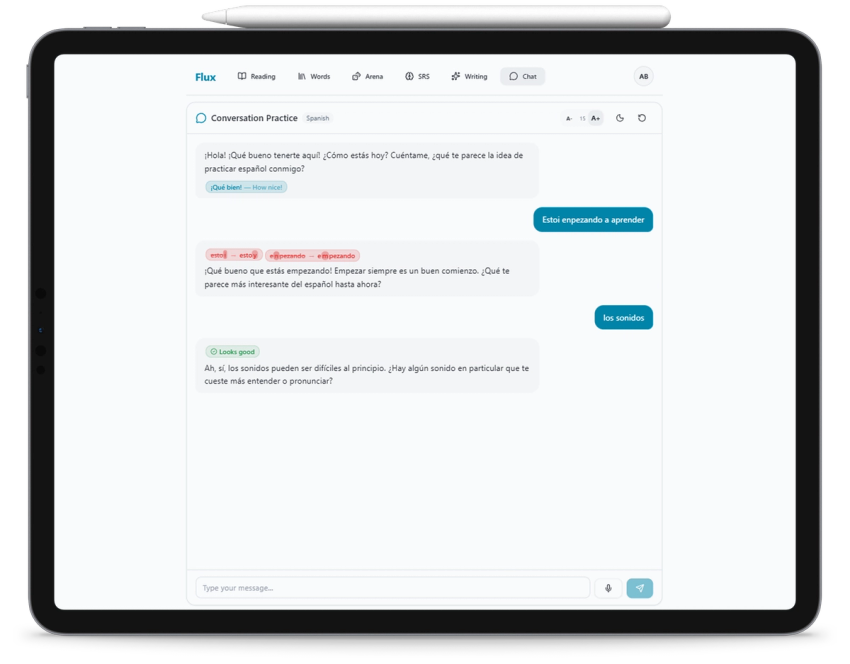
Interactive
Highly customazible
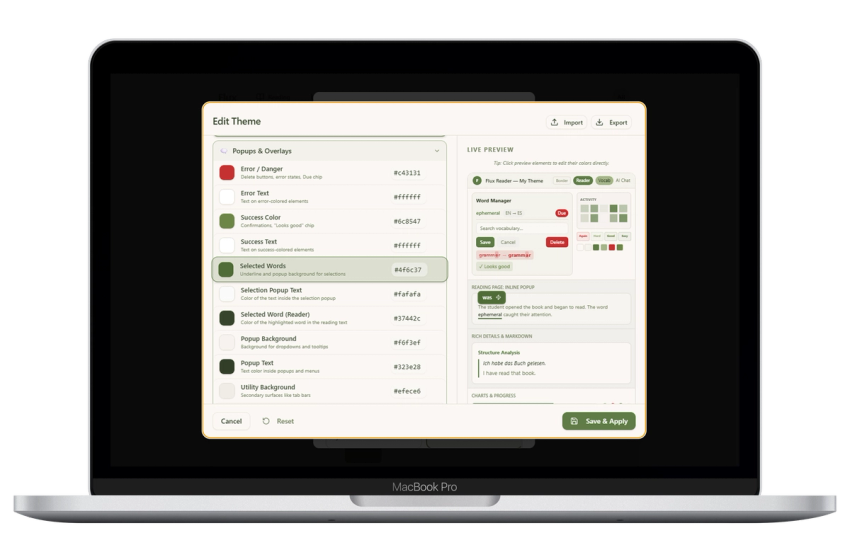
More features:
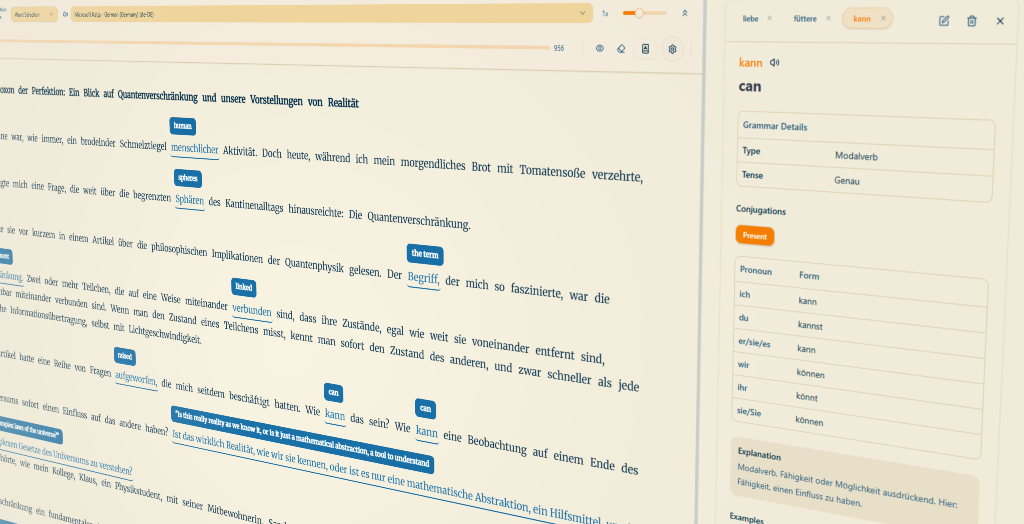
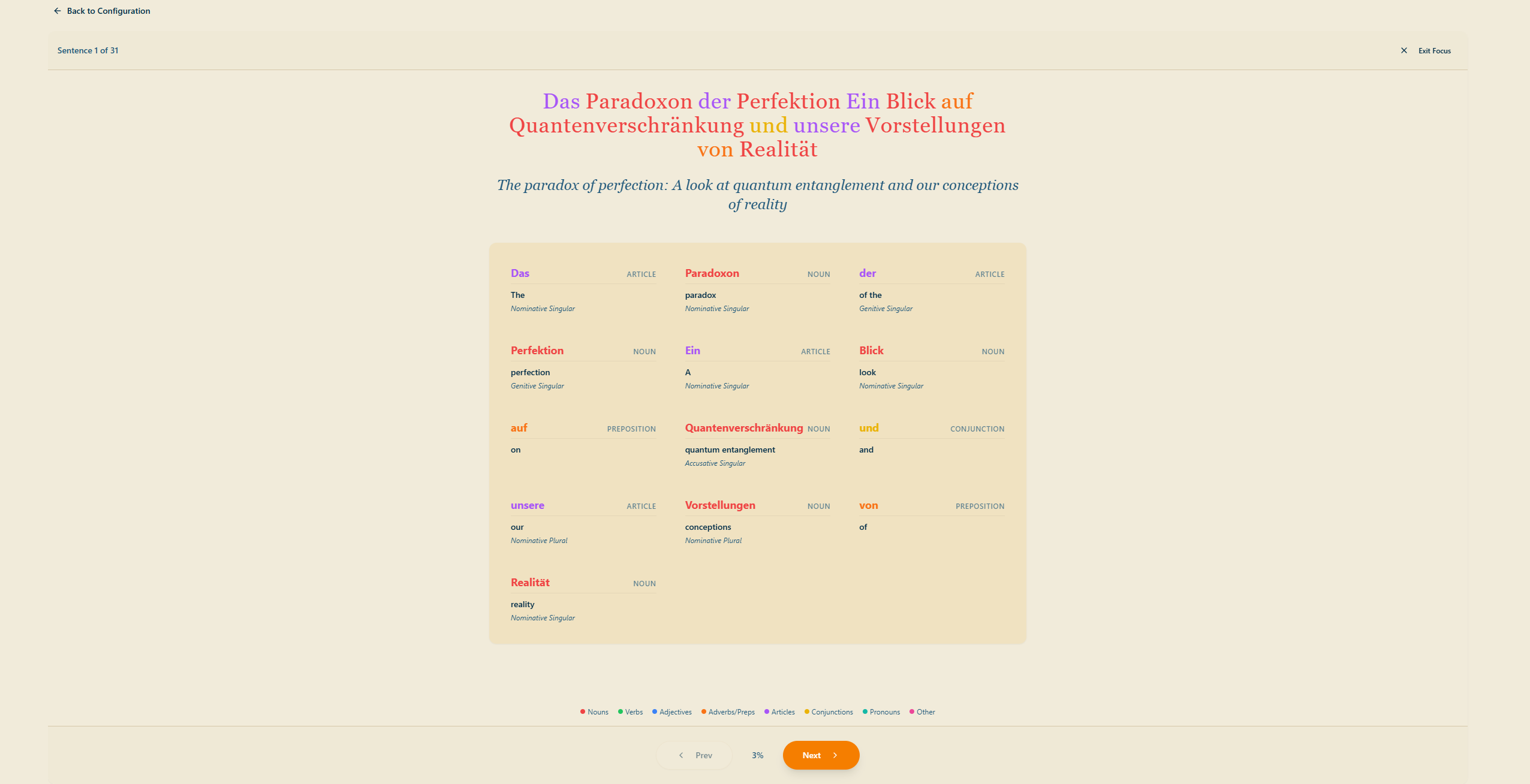
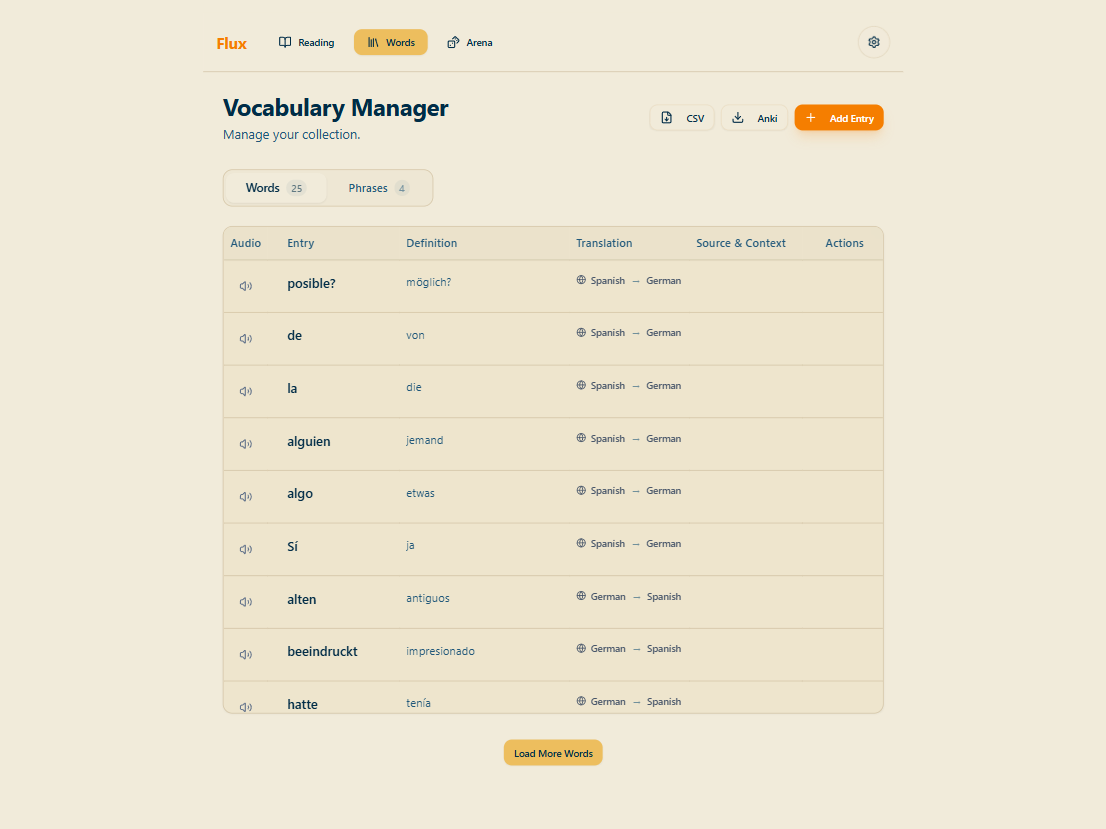
2. Neural Audio & Karaoke Sync
To aid pronunciation, Flux features a high-fidelity audio engine.
- Karaoke Highlighting: Using the browser’s Speech Synthesis API, I implemented real-time word highlighting that stays perfectly synced with the audio playback.
- Smart Resume: The system tracks playback position at the sentence level. If you pause, Flux intelligently resumes from the start of the last logical thought, ensuring natural continuity for the learner.
🛡️ Privacy as a Core Feature
The primary value proposition of Flux is Zero Data Leakage.
By containerizing the PostgreSQL database and leveraging local LLMs, Flux ensures that a user's reading habits, saved vocabulary, and generated texts never leave their network. It provides the "smart" features of a modern SaaS without the subscription fees or the privacy trade-offs.
🛠️ The Tech Stack
- Frontend: React 19 (Signals-ready), TypeScript, Tailwind CSS, Zustand (State Management), Framer Motion.
- Backend: NestJS, Prisma ORM, Express.
- Infrastructure: Docker (Postgres), Ollama (Local LLM).
💡 The Takeaway
Flux demonstrates my ability to build vertically integrated products. It shows proficiency in modern React patterns, backend proxying, and the emerging field of local AI integration. It’s a project that balances complex technical requirements with a clean, user-centric design.
Crafted with ❤️ by Stanley Morales