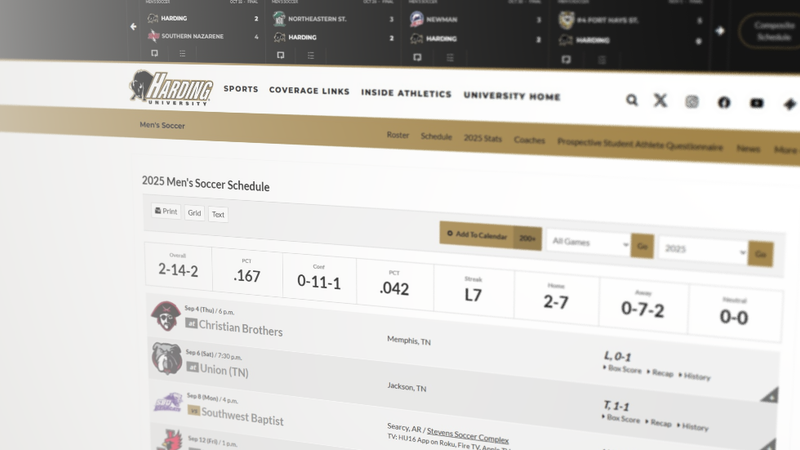
Modernizing the Game: Transitioning HardingSports.com to Angular
In the fast-paced world of collegiate athletics, digital platforms must be as agile as the athletes they cover. The evolution of HardingSports.com recently reached a major milestone: a strategic architectural transition from React to Angular, backed by a powerful .NET backend.
The Catalyst for Change
While the previous React-based components served the site well, the growing complexity of real-time statistics and multi-sport management required a more integrated framework. The move to Angular was driven by the need for a highly structured, enterprise-level environment that could provide:
- Native Type Safety: Leveraging TypeScript natively within Angular to reduce runtime errors across the extensive sports data models.
- Modular Architecture: Using Angular's hierarchical dependency injection to manage complex states for different sports seasons simultaneously.
- Uniformity: Creating a consistent development pattern for the entire engineering team to follow as the platform scales.
Engineering the Migration
Moving a live sports platform is like changing the tires on a car while it's moving at 60 mph. Our strategy focused on a phased rollout to ensure zero downtime for fans and staff.
1. The API Bridge (.NET)
We utilized the existing .NET backend as the "source of truth." By maintaining a robust RESTful API layer, we were able to build out the new Angular frontend while the legacy React components were still fetching data.
2. Component Parity
We meticulously rebuilt interactive elements, such as live scoreboards and player rosters. By moving from React's functional components to Angular’s class-based structure, we improved the maintainability of complex UI logic.
3. Performance Optimization
During the transition, we implemented Angular's Lazy Loading. This ensured that a user looking for Football schedules didn't have to load the data or scripts associated with Basketball or Volleyball, significantly decreasing initial load times.
Comparison of the Evolution
| Feature | Previous (React) | Current (Angular) |
|---|---|---|
| State Management | Fragmented across hooks | Centralized via Services |
| Data Binding | Manual/One-way focus | Powerful Two-way data binding |
| Scalability | High, but requires third-party tools | Built-in via NgModules |
| Backend Sync | Standard Fetch/Axios | Integrated RxJS Observables |
The Result
The transition has resulted in a more robust, predictable, and performant platform. HardingSports.com now benefits from a unified codebase that allows for faster feature deployments and a smoother experience for the end-user. By moving to Angular, we haven't just updated the tech stack; we've built a foundation for the future of Harding University Athletics.